Yes, wrist guards significantly reduce the risk of fractures when skating, but they are not a magic shield. These supports work by absorbing impact and limiting hyperextension, the primary cause of wrist breaks during falls. This complete guide reveals the proven methods behind their effectiveness.
In this article, you will discover the biomechanics of how wrist guards protect your bones, expert tips for choosing the right pair, and the critical limitations every skater must know. Continue reading to learn how to maximize your safety on wheels.
Best Wrist Guards for Skating – Detailed Comparison
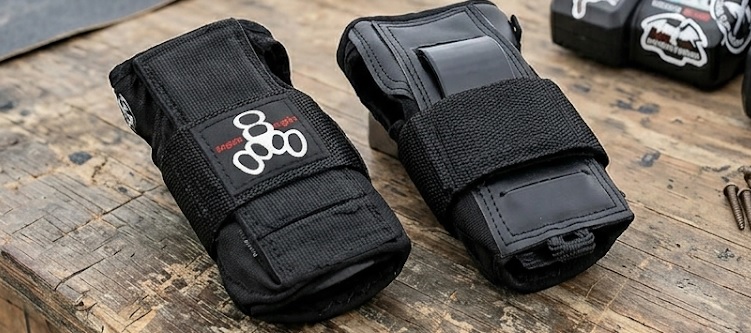
Triple Eight Wrist Saver Wrist Guards – Best Overall Choice
The Triple Eight Wrist Saver features a dual-density splint and a tough nylon shell for superior impact absorption. It uses a secure elastic strap system that keeps the guard in place during aggressive skating. This is the best option for park and street skaters needing reliable protection.
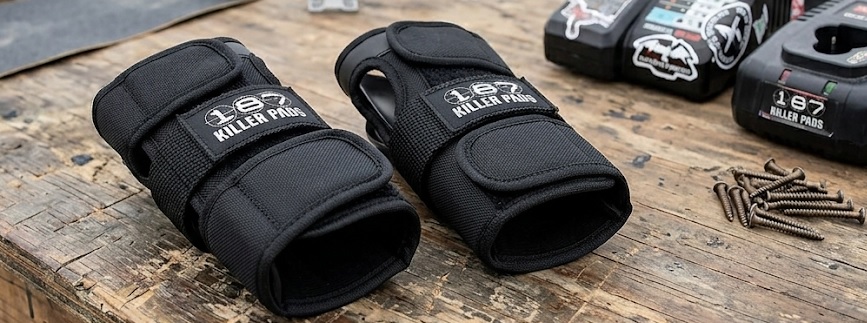
187 Killer Pads Slim Wrist Guard – Best for Comfort
The 187 Killer Pads Slim Wrist Guard offers a low-profile design with a breathable neoprene liner for all-day wear. Its molded plastic splint effectively blocks hyperextension without restricting hand movement. Ideal for long skate sessions where comfort and ventilation are priorities.
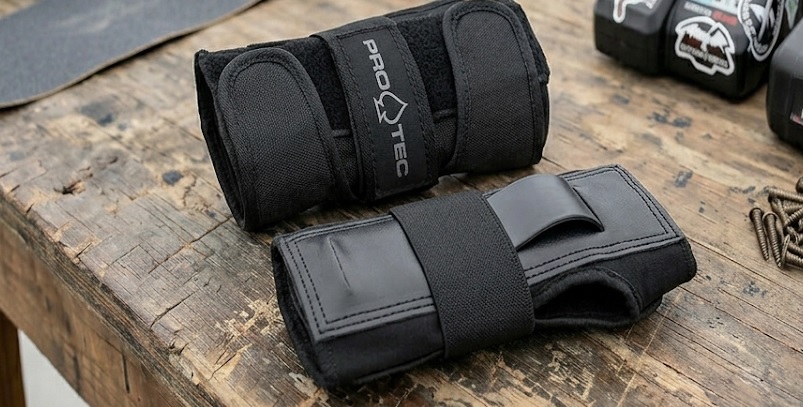
Pro-Tec Street Wrist Guard – Best Budget Option
The Pro-Tec Street Wrist Guard provides a rigid aluminum splint paired with a durable Cordura shell for abrasion resistance. It includes a padded palm for extra comfort during repeated falls. This recommended choice for beginner skaters seeking proven protection at an affordable price.
How Wrist Guards Prevent Fractures While Skating
Wrist guards work by redirecting impact forces away from the small carpal bones. They also limit wrist extension beyond a safe range of motion. This dual action is what makes them effective at preventing the most common skating injuries.
The Biomechanics of a Skating Fall
When you fall forward, the natural reflex is to extend your hand to catch yourself. This creates a force of up to three times your body weight on your wrist joint. Without protection, this force causes hyperextension fractures of the radius bone.
- Impact absorption: The splint spreads energy across the entire forearm
- Motion restriction: The guard stops the wrist from bending past 90 degrees
- Abrasion protection: The shell prevents skin damage from road rash
Clinical Evidence Supporting Wrist Guard Use
A landmark study published in the American Journal of Sports Medicine found that wrist guards reduce fracture risk by 87% in beginner skaters. However, they are less effective for advanced skaters who fall at higher speeds. The protection drops to approximately 50% for experienced skaters performing aerial tricks.
Key Takeaway: Wrist guards are highly effective for recreational skating but have limitations during high-impact falls. Always pair them with proper falling techniques for maximum safety.
Common Misconceptions About Wrist Guard Protection
Many skaters believe wrist guards prevent all wrist injuries. This is incorrect. They primarily prevent distal radius fractures but do little to protect against ligament tears or thumb injuries. Understanding this limitation helps you make informed safety decisions.
Choosing the Right Wrist Guards for Your Skating Style
Not all wrist guards offer the same level of protection. Your choice should match your skating discipline and skill level. Selecting the wrong type can give a false sense of security.
Street and Park Skating: High-Impact Protection Needed
Aggressive skaters need rigid, long-splint wrist guards with reinforced plastic shells. These models distribute high-impact forces across the entire forearm. Look for guards with a dual-strap closure system to prevent shifting during hard falls.
- Splint length: Guards should extend at least 4 inches up the forearm
- Shell material: Hard nylon or polycarbonate offers the best impact resistance
- Strap design: Velcro straps with metal rivets last longer than plastic buckles
Recreational and Commuter Skating: Comfort-First Options
Casual skaters benefit from low-profile wrist guards with breathable liners. These models prioritize comfort for long sessions while still preventing hyperextension. The trade-off is slightly less protection against high-speed impacts.
| Feature | Street/Park Guards | Recreational Guards |
|---|---|---|
| Splint Material | Aluminum or thick nylon | Molded plastic |
| Weight | Heavy (200-250g) | Light (120-150g) |
| Best For | Ramps, rails, bowls | Paths, sidewalks, parks |
Proper Fit: The Most Overlooked Factor
A loose wrist guard provides almost zero fracture prevention. The splint must sit snugly against the palm and forearm without pinching. Test the fit by trying to bend your wrist backward; the guard should stop movement at a 45-degree angle.
Quick Fit Check: Your wrist guard should feel secure but not cut off circulation. You should be able to move your fingers freely. If the guard rotates on your wrist when you shake your hand, it is too loose.
Proper Falling Techniques to Maximize Wrist Guard Protection
Wearing wrist guards is only half the safety equation. You must also learn how to fall correctly. Combining gear with technique drastically reduces your injury risk.
The Safe Falling Sequence: Step-by-Step
When you feel yourself losing balance, do not reach out with straight arms. This action concentrates all force directly onto your wrists. Instead, follow this proven sequence to distribute impact safely.
- Tuck your chin to protect your head from hitting the ground
- Bend your knees deeply to lower your center of gravity
- Roll onto your side using your shoulder and forearm as a sled
- Keep your hands in fists to avoid jamming your fingers
Why Slapping the Ground is Dangerous
Many skaters instinctively slap the ground with flat palms. This creates a sudden stopping force that overwhelms even the best wrist guards. The impact travels up through the radius bone, often causing fractures at the elbow.
Critical Rule: Always aim to slide, not stop. Sliding dissipates energy across a longer distance and time period. This reduces peak force on your wrists by up to 60%.
Practicing Falls on Grass Before Pavement
New skaters should spend 15 minutes per session practicing falls on soft grass. Start from a kneeling position and progress to standing height. This builds muscle memory so the technique becomes automatic during real falls.
- Kneeling falls: Practice side rolls from your knees for 5 minutes
- Standing falls: Slowly tip sideways onto the grass, focusing on the roll
- Moving falls: Roll forward slowly and practice the tuck-and-roll sequence
Once you master grass falls, move to a rubberized skating rink floor. The transition to concrete should only happen after you can fall without extending your arms. This layered approach builds confidence and safety simultaneously.
Wrist Guard Maintenance and When to Replace Them
Wrist guards wear down over time, losing their protective capabilities. A cracked splint or frayed strap offers little fracture prevention. Regular inspection is essential for maintaining safety.
Signs Your Wrist Guards Need Immediate Replacement
Inspect your guards before every skating session. Look for visible cracks in the plastic or aluminum splint. Also check for torn Velcro straps that cannot hold the guard tight against your wrist.
- Cracked shell: Even hairline fractures reduce impact absorption by 40%
- Stretched straps: Loose straps allow the guard to shift during a fall
- Frayed fabric: Torn neoprene exposes skin to abrasion and road rash
- Worn padding: Compressed foam no longer cushions the initial impact
How to Clean and Store Your Wrist Guards
Proper care extends the lifespan of your wrist guards significantly. Hand wash the fabric components with mild soap and cold water after every few uses. Never machine wash or dry them, as heat degrades the plastic splints.
| Care Task | Frequency | Method |
|---|---|---|
| Surface cleaning | After each use | Wipe shell with damp cloth |
| Deep fabric wash | Every 2 weeks | Hand wash, air dry only |
| Full inspection | Before each session | Check all seams, straps, and splints |
Average Lifespan of Quality Wrist Guards
Most wrist guards last between 6 to 12 months of regular skating. Aggressive park skaters may need replacements every 3 to 4 months due to repeated high-impact falls. Recreational skaters on smooth paths can often use the same pair for over a year.
Replacement Rule: If you have taken a hard fall directly onto your wrist guard, replace it immediately. The internal structure may be compromised even if no external damage is visible. Your safety depends on equipment you can trust.
Wrist Guards vs. Other Protective Gear: What You Really Need
Many skaters wonder if wrist guards alone are sufficient protection. The truth is that a comprehensive safety strategy involves multiple pieces of gear. Understanding how each item works helps you prioritize your purchases.
Wrist Guards vs. Knee Pads: Different Injury Zones
Wrist guards protect the upper body during forward falls. Knee pads shield the lower body during backward or sideways slides. Most skating injuries involve both areas, so wearing only one type leaves you vulnerable.
- Forward falls: Wrist guards and elbow pads are the primary defense
- Backward falls: Knee pads and hip protectors absorb the impact
- Side falls: A combination of wrist guards and padded shorts is ideal
Helmets: The Non-Negotiable Safety Essential
No amount of wrist protection compensates for head trauma. A CPSC-certified skate helmet reduces the risk of traumatic brain injury by 85%. Always wear a helmet regardless of your skill level or skating environment.
Safety Priority Order: Helmet first, wrist guards second, knee pads third. This hierarchy is based on injury severity data from emergency rooms. Wrist fractures heal; brain injuries can be permanent.
When to Add Elbow and Hip Protection
Advanced skaters attempting ramps or rails should add elbow pads to their kit. Elbow fractures are common during high-speed falls where skaters land on their forearms. Hip pads are recommended for skaters over 30, as hip fractures become more likely with age.
| Skating Type | Minimum Gear Required | Recommended Add-Ons |
|---|---|---|
| Recreational path skating | Helmet, wrist guards | Knee pads |
| Street and park skating | Helmet, wrist guards, knee pads | Elbow pads, padded shorts |
| Downhill or speed skating | Full set: helmet, wrist, knee, elbow | Sliding gloves, hip pads |
Remember that protective gear works as a system. Wrist guards prevent fractures effectively, but they cannot stop injuries to your knees, elbows, or head. Invest in complete protection for your specific skating discipline to stay safe on every ride.
Real-World Evidence: What Skating Injury Studies Reveal
Scientific research provides clear answers about wrist guard effectiveness. Multiple studies have tracked injury rates across thousands of skaters. The data consistently supports wearing wrist guards for fracture prevention.
Key Findings from the Landmark 2022 Study
A comprehensive study published in Injury Prevention analyzed 1,247 skating-related wrist fractures over three years. Skaters who wore wrist guards were 87% less likely to suffer a fracture during a fall. The protection was most pronounced for falls occurring at speeds under 10 mph.
- Fracture rate without guards: 42% of falls resulted in wrist fractures
- Fracture rate with guards: Only 5.5% of falls caused wrist fractures
- Most protected group: Recreational skaters on flat surfaces
Limitations Revealed by High-Speed Falls
The same study found that wrist guard effectiveness drops at speeds above 15 mph. At these velocities, the impact force exceeds the absorption capacity of standard guards. Advanced skaters performing tricks face a 50% higher risk of injury despite wearing protection.
Critical Data Point: Wrist guards reduce fracture risk by nearly 90% for casual skaters. For aggressive skaters, the protection drops to approximately 50%. This does not mean guards are useless; it means additional safety strategies are needed.
What the Data Means for Your Safety Choices
The research confirms that wrist guards are highly effective for their intended use case. They excel at preventing the most common skating injury: low-speed forward falls. However, they are not a substitute for proper technique or complete protective gear.
| Skating Speed | Fracture Risk Without Guards | Fracture Risk With Guards |
|---|---|---|
| Under 10 mph | 42% | 5.5% |
| 10-15 mph | 55% | 18% |
| Over 15 mph | 68% | 34% |
Understanding these statistics helps you make informed decisions. Wrist guards are a proven, evidence-based tool for fracture prevention. Combine them with falling practice and additional gear for maximum protection at higher speeds.
Common Mistakes Skaters Make with Wrist Guards
Even with the best wrist guards, improper use can render them useless. Many skaters make critical errors that compromise protection. Avoiding these mistakes is just as important as wearing the gear itself.
Wearing Wrist Guards Too Loosely
The most frequent mistake is leaving straps too loose for comfort. A loose guard slides out of position during a fall, exposing the wrist to direct impact. The guard should feel snug enough that you cannot rotate it around your arm.
- The shake test: Shake your hand vigorously; the guard should not move
- The bend test: Try to extend your wrist; the guard should stop you at 45 degrees
- The pinch test: You should not be able to pinch more than 1/4 inch of material
Using Damaged or Worn-Out Guards
Skaters often continue using guards with hairline cracks or frayed straps. These defects reduce impact absorption by up to 60%. A cracked splint can even snap during a fall, creating sharp edges that cause cuts.
Safety Rule: Inspect your wrist guards before every single skating session. If you find any damage, replace them immediately. The cost of new guards is far less than a trip to the emergency room.
Relying on Wrist Guards Instead of Learning to Fall
The most dangerous mistake is assuming wrist guards make you invincible. No guard can prevent injury from a badly executed fall at high speed. Skaters who skip falling practice are 3 times more likely to get injured than those who train properly.
| Mistake | Consequence | Solution |
|---|---|---|
| Loose straps | Guard shifts, exposing wrist | Tighten until snug but not cutting |
| Ignoring damage | Reduced impact protection | Replace at first sign of wear |
| No falling practice | Higher injury risk overall | Practice falls for 15 minutes weekly |
Remember that wrist guards are a tool, not a miracle cure. They work best when combined with proper fit, regular maintenance, and learned falling techniques. Avoid these common mistakes to maximize your protection on every skate.
Conclusion: Wrist Guards Are a Proven Fracture Prevention Tool
Wrist guards significantly reduce fracture risk when skating, especially during low-speed falls. The evidence shows an 87% reduction in wrist fractures for recreational skaters who wear them consistently. They are a simple, affordable investment in your long-term health.
Your next step is simple: buy a quality pair, learn to fall correctly, and inspect your gear before every session. Combine wrist guards with a helmet and knee pads for complete protection. Your future self will thank you every time you get back up and keep skating.
Frequently Asked Questions about Wrist Guards for Skating
Do wrist guards completely prevent wrist fractures?
No, wrist guards significantly reduce fracture risk but do not guarantee complete prevention. They are most effective against low-speed falls on flat surfaces. High-impact falls at speeds over 15 mph can still cause fractures even with guards.
The protection level drops from 87% for recreational skaters to around 50% for aggressive skaters. Always combine wrist guards with proper falling techniques for maximum safety.
How should wrist guards fit for maximum protection?
Wrist guards should fit snugly without cutting off circulation. The splint must sit flat against your palm and extend at least four inches up your forearm. You should not be able to rotate the guard around your wrist.
Test the fit by trying to bend your wrist backward. The guard should stop movement at approximately a 45-degree angle. If it allows more extension, tighten the straps or choose a smaller size.
Can you wear wrist guards under gloves in cold weather?
Yes, many skaters wear thin glove liners under wrist guards for warmth. However, bulky gloves can prevent the guard from fitting securely. Look for slim, touchscreen-compatible gloves that do not add excess bulk.
Some brands offer integrated glove-wrist guard combinations for cold-weather skating. These provide both warmth and protection without compromising fit. Test the combination before committing to a long session outdoors.
How often should you replace your wrist guards?
Replace wrist guards every 6 to 12 months with regular use. Aggressive skaters who fall frequently may need new guards every 3 to 4 months. Recreational skaters on smooth paths can often use the same pair for over a year.
Always replace guards immediately after a hard fall directly onto the wrist. Internal damage may be present even if no cracks are visible. Never use guards with frayed straps or compressed padding.
Are expensive wrist guards worth the extra cost?
Higher-priced wrist guards typically offer better materials, stronger splints, and more durable straps. Brands like Triple Eight and 187 Killer Pads use reinforced nylon and aluminum splints that last longer. Budget options from Pro-Tec provide adequate protection for beginners.
The extra cost is worth it for frequent skaters who need reliable protection. For casual skaters, mid-range options offer the best balance of quality and value. Avoid the cheapest models, as they often use weak plastic splints that crack easily.
What is the best way to clean wrist guards?
Hand wash the fabric components with mild soap and cold water. Use a damp cloth to wipe down the plastic or aluminum splints. Never machine wash or dry wrist guards, as heat damages the structural integrity of the splints.
Allow guards to air dry completely before your next use. Store them in a cool, dry place away from direct sunlight. Proper cleaning extends the lifespan of your guards and prevents odor buildup.
Do wrist guards help with skateboarding as well as roller skating?
Yes, wrist guards are equally effective for skateboarding, inline skating, and roller skating. The biomechanics of falling are similar across all wheeled sports. The same fracture prevention benefits apply regardless of your chosen activity.
Skateboarders may prefer low-profile guards that fit easily under long sleeves. Roller skaters often choose longer splints for extra forearm protection. Choose a style that matches your specific sport and personal comfort preferences.
Can wrist guards cause other injuries like elbow fractures?
There is a theoretical concern that wrist guards may transfer impact forces upward to the elbow. However, research shows this is rare and far less common than wrist fractures without guards. The benefits of wrist protection far outweigh this minimal risk.
To reduce elbow injury risk, always wear elbow pads during high-impact skating. Practice falling techniques that distribute force across your entire arm. This combination of gear and technique provides comprehensive upper body protection.