
Skate trucks loosen over time primarily due to vibration and impact forces that naturally break down thread lock and metal tension. Understanding this process is the complete guide to maintaining a safe, responsive ride.
In this guide, you will learn the exact mechanical causes of loosening trucks and expert tips to prevent them. Discover proven methods to keep your hardware tight so you can skate with total confidence.
Best Skate Hardware for Preventing Loose Trucks – Detailed Comparison
Shorty’s Allen Hardware – Best Overall Choice
This 7/8-inch hardware set features a precision-machined Phillips head and a hardened steel Allen socket for maximum grip. The black oxide coating resists rust and corrosion. Best for skaters who want a reliable, vibration-resistant lock that stays tight between sessions.
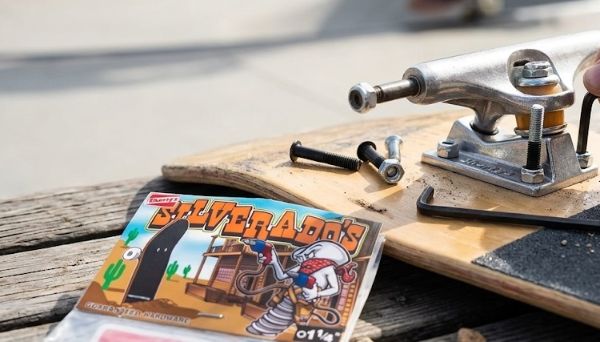
Independent Phillips Hardware – Best for Durability
Made from heat-treated steel with a deep Phillips head design, this 1-inch hardware set offers superior bite against nylon lock nuts. The thick washer base distributes pressure evenly. Ideal for aggressive skaters who need hardware that withstands heavy impact without stripping.
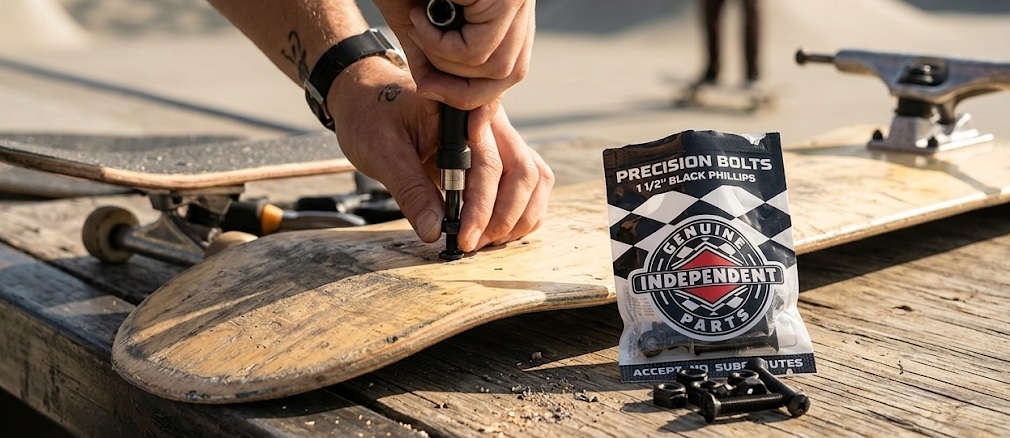
Bones Hardcore Hardware – Best for Vibration Resistance
This 7/8-inch set uses a unique square-shoulder bolt design that prevents spinning inside the deck. The precision-cut threads engage lock nuts more securely. Recommended for technical skaters who want a snug fit that resists loosening from constant ollies and landings.
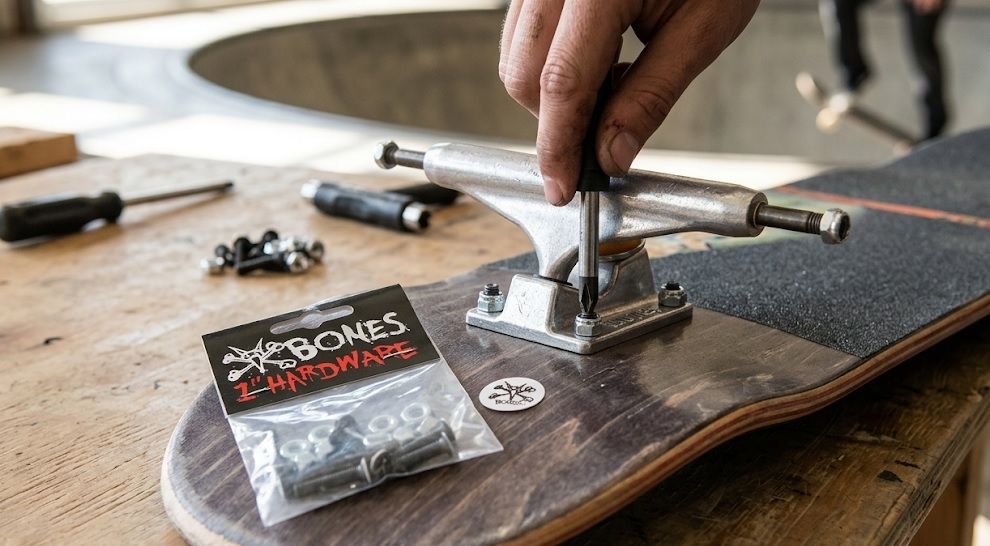
Why Skate Trucks Loosen: The Science of Vibration and Thread Wear
Constant vibration from riding is the primary force that loosens skate truck hardware. Every crack, curb, and transition sends micro-shocks through the board that gradually break the friction hold between bolt threads and lock nuts.
How Vibration Breaks the Locking Mechanism
Nylon lock nuts use a plastic insert to create friction against the bolt threads. Over time, repeated vibration wears down this nylon insert, reducing its grip. Once the insert loses its shape, the nut can spin freely and loosen mid-session.
- Landing impacts compress the nylon, flattening the locking ring
- Grinding and sliding generate heat that softens the nylon material
- High-frequency vibration from rough surfaces gradually works threads loose
Metal Fatigue and Thread Expansion
Steel bolts and aluminum baseplates expand and contract at different rates due to temperature changes. This differential movement creates microscopic gaps between threads. After repeated thermal cycles, the bolt can rotate more easily within the nut.
Hardware also experiences cold flow deformation under heavy loads. The bolt stretches slightly from repeated stress, reducing the clamping force that holds the truck tight against the deck.
The Role of Deck Compression
Wooden skate decks compress naturally under the pressure of tightened hardware. As the wood fibers settle, the bolt loses its initial tension. This is why new setups often feel loose after just a few sessions of riding.
Key takeaway: Loose trucks are a natural mechanical process, not a sign of poor equipment. Regular hardware inspection and proper tightening techniques prevent dangerous wobble and maintain optimal board performance.
How to Prevent Skate Trucks From Loosening: Expert Maintenance Tips
Preventing loose trucks is simple with the right techniques and tools. Proactive maintenance keeps your hardware tight and your ride safe, saving you from mid-session adjustments or dangerous wobble.
Use Thread Locking Compound
Apply a small drop of blue Loctite (medium strength) to each bolt before installation. This liquid filler bonds to the threads and resists vibration, keeping nuts securely in place. Unlike red Loctite, the blue formula allows for easy removal with standard tools.
- Clean threads first with isopropyl alcohol to remove grease
- Apply sparingly—one drop per bolt is enough
- Wait 10 minutes before riding for optimal bonding
Check Hardware Before Every Session
Make it a habit to test your truck bolts with a skate tool before skating. A quick quarter-turn check can catch loose nuts before they cause problems. Pay special attention after landing hard tricks or riding on rough terrain.
Pro tip: If you find a loose nut, remove it completely, clean the threads, and re-tighten to full torque. Simply tightening a loose nut without cleaning can lead to quick re-loosening.
Replace Hardware Regularly
Skate hardware is a wear item that needs replacement every 2-3 months for frequent skaters. Old bolts develop stripped threads and stretched shafts that cannot hold tension properly.
| Hardware Condition | Action Needed |
|---|---|
| Visible rust or corrosion | Replace immediately |
| Nylon nut spins freely | Replace hardware set |
| Bolt head stripped | Replace before next session |
Common Mistakes That Make Skate Trucks Loosen Faster
Many skaters unknowingly accelerate hardware loosening through poor installation habits. Avoiding these common errors will significantly extend the time between necessary adjustments and keep your board safer.
Over-Tightening Bolts
Cranking bolts down as hard as possible actually damages the nylon locking insert in the nut. Excessive force strips the nylon ring, reducing its grip and causing premature loosening. Tighten until snug, then add only a quarter-turn more.
- Use a skate tool, not a power drill for controlled torque
- Listen for the nylon “click”—that indicates proper engagement
- Stop if you hear cracking from the deck wood
Mixing Old and New Hardware
Reusing old bolts with new nuts (or vice versa) creates uneven thread wear and poor locking performance. Old bolts have stretched threads that cannot mate properly with fresh nylon inserts. Always replace hardware as a complete set of eight bolts and eight nuts.
Ignoring Washer Placement
Washers must sit flat against the truck baseplate with the cupped side facing outward. Incorrect washer placement creates a gap that allows the bolt to wiggle under pressure. This micro-movement accelerates loosening and can damage your deck.
| Common Mistake | Correct Practice |
|---|---|
| Using Phillips head without checking depth | Ensure bolt sits flush with nut surface |
| Skipping washers to save weight | Always use included washers for stability |
| Tightening in random order | Use a star pattern for even pressure |
How to Properly Tighten Skate Trucks: A Step-by-Step Guide
Knowing the correct tightening technique ensures your hardware stays secure longer. Follow this precise method every time you install or adjust your truck bolts for maximum holding power.
Step 1: Prepare Your Hardware and Tools
Gather a quality skate tool or T-handle Allen wrench and your hardware set. Inspect each bolt and nut for damage before starting. Ensure the bolt threads are clean and free of old thread locker or debris.
- Use the correct size tool—usually 3/8-inch or 10mm
- Check for stripped heads that could slip during tightening
- Have replacement hardware ready if any piece looks worn
Step 2: Install Bolts in the Correct Order
Insert all four bolts through the deck and baseplate before tightening any nuts. This prevents misalignment and ensures even pressure distribution. Place washers with the cupped side facing the baseplate for optimal contact.
Tighten each nut finger-tight first, then use your tool to secure them. Work in a star pattern (top-left, bottom-right, top-right, bottom-left) to avoid warping the baseplate.
Step 3: Apply Final Torque Correctly
Tighten each nut until you feel moderate resistance from the nylon locking ring. Stop turning when the nut is flush with the bolt end. Over-tightening past this point damages the nylon insert.
| Tightness Level | Indicator |
|---|---|
| Too loose | Nut spins past nylon with no resistance |
| Perfect | Snug with nylon “grab” felt during turning |
| Too tight | Nylon feels crushed or bolt creaks |
Final check: Wiggle each truck after tightening. Any movement means you need to re-tighten or replace the hardware.
When to Replace Skate Truck Hardware: Signs of Wear and Danger
Knowing when to swap out old hardware is just as important as proper installation. Riding with worn bolts or nuts creates a serious safety risk that can lead to sudden truck detachment during a trick.
Visible Rust and Corrosion
Surface rust weakens the structural integrity of steel bolts over time. Orange or brown discoloration indicates moisture damage that compromises thread strength. Replace any hardware showing rust spots immediately, especially around the thread area where stress is highest.
- Check after wet sessions—moisture accelerates corrosion
- Inspect under the head where rust often hides
- Don’t sand rust off—this thins the metal further
Stripped or Rounded Bolt Heads
A bolt head that no longer grips your tool is a clear sign of failure. Stripped Phillips or Allen heads make removal difficult and indicate the metal has softened. Continuing to ride with stripped heads risks being unable to tighten or remove the hardware later.
Nylon Lock Nuts That Spin Freely
Test each nut by threading it onto a bolt by hand. If it spins without resistance past the nylon section, the locking insert is worn out. A functional lock nut should require force to thread through the entire nylon ring.
| Wear Sign | Risk Level | Action |
|---|---|---|
| Light surface rust | Moderate | Replace within 1 week |
| Stripped bolt head | High | Replace immediately |
| Free-spinning lock nut | Critical | Replace before next ride |
Skate Truck Hardware Materials: Which Type Stays Tightest Longest?
The material of your hardware directly affects how well it resists loosening. Different metals offer varying levels of grip, durability, and vibration resistance that impact long-term performance.
Stainless Steel Hardware: Best for Corrosion Resistance
Stainless steel bolts resist rust and maintain their thread shape longer than standard steel. This corrosion resistance ensures consistent locking force over time, even in humid conditions. The trade-off is slightly softer metal that can strip more easily under excessive torque.
- Best for: Skaters in wet climates or near saltwater
- Lifespan: 3-4 months with regular use
- Caution: Requires careful tightening to avoid stripping
Heat-Treated Carbon Steel: Maximum Holding Power
Heat-treated carbon steel offers the highest tensile strength of common hardware materials. These bolts resist stretching and maintain thread integrity under heavy impact. Brands like Independent use this material for its superior grip against nylon lock nuts.
Hardened Alloy Steel: Premium Vibration Resistance
Hardened alloy steel combines extreme durability with excellent thread retention. This material resists the micro-stretching that causes gradual loosening. Bones Hardcore Hardware uses this premium material for skaters who demand maximum holding power.
| Material | Strength | Corrosion Resistance | Best Use |
|---|---|---|---|
| Standard steel | Good | Low | Casual skating |
| Stainless steel | Moderate | Excellent | Wet conditions |
| Heat-treated carbon | Very high | Moderate | Aggressive skating |
| Hardened alloy | Extreme | Good | Professional use |
How Skating Style Affects How Fast Skate Trucks Loosen
Your personal skating style directly influences how quickly your hardware loosens. Different disciplines put unique stresses on truck bolts that accelerate wear at varying rates.
Street Skating: High Impact, Fast Loosening
Street skaters experience the most aggressive hardware loosening due to repeated hard landings on concrete. Ollies, kickflips, and stair sets generate intense vibration that rapidly breaks down nylon lock nuts. Street skaters should check hardware after every session and replace sets monthly.
- Common issue: Bolts loosen after 2-3 hard landing sessions
- Prevention: Use thread locker and hardened alloy hardware
- Check frequency: Before and after every street session
Vert and Transition Skating: Consistent Vibration
Riding ramps and bowls creates continuous, lower-frequency vibration that gradually works hardware loose. The constant pumping and carving motion applies steady rotational force to bolts. Vert skaters often notice loosening after extended sessions rather than sudden failure.
Cruising and Longboarding: Different Stress Patterns
Cruisers and longboarders face unique loosening factors from rough pavement and long-distance vibration. The constant rolling over uneven surfaces creates a rattling effect that slowly backs out nuts. However, lower impact forces mean hardware lasts longer than in street skating.
| Skating Style | Loosening Speed | Hardware Lifespan | Recommended Check |
|---|---|---|---|
| Street | Fast (1-2 sessions) | 1 month | Every session |
| Vert/Transition | Moderate | 2-3 months | Weekly |
| Cruising | Slow | 3-4 months | Bi-weekly |
| Park (mix) | Moderate | 2 months | Every 2-3 sessions |
Conclusion: Keep Your Skate Trucks Tight and Your Ride Safe
Understanding why skate trucks loosen over time empowers you to prevent dangerous hardware failure. Vibration, metal fatigue, and deck compression are natural forces you can manage with proper maintenance.
Check your hardware before every session and replace worn sets immediately. Use thread locker and quality materials suited to your skating style for maximum holding power.
Apply these expert tips today to keep your board tight and your focus on progressing. A safe setup means more time skating and less time worrying about loose trucks.
Frequently Asked Questions About Why Skate Trucks Loosen Over Time
How often should I tighten my skate truck bolts?
Check your truck bolts before every skating session. A quick quarter-turn with your skate tool ensures they remain snug and safe.
For frequent street skaters, a full hardware check after every session is recommended. Cruisers and vert skaters can check weekly and still maintain safety.
Can I use Loctite on skateboard truck bolts?
Yes, blue Loctite (medium strength) is safe and highly recommended for skateboard hardware. It fills microscopic gaps between threads to resist vibration-induced loosening.
Avoid red Loctite, which requires heat for removal and can damage your bolts. Apply one small drop per bolt and wait ten minutes before riding for best results.
Why do my new skateboard trucks keep coming loose?
New trucks often loosen quickly because the hardware needs to seat properly into the deck. Wood compresses under the bolt pressure, creating slack that requires re-tightening after initial rides.
This is normal and happens with every fresh setup. Tighten your hardware after your first two sessions, and the bolts will settle into a stable position.
What is the best way to prevent skate truck hardware from loosening?
The best prevention combines three techniques: use blue Loctite on threads, replace hardware every 2-3 months, and tighten bolts in a star pattern for even pressure distribution.
Investing in quality heat-treated or hardened alloy hardware also provides superior thread retention. Bones Hardcore and Independent Phillips sets are top choices for lasting hold.
Can loose truck hardware damage my skateboard deck?
Yes, loose hardware can cause serious deck damage over time. The constant movement of the truck baseplate against the deck wood creates oval-shaped bolt holes that weaken the board.
This damage is irreversible and shortens deck lifespan significantly. Catching loose bolts early prevents this wear and saves you money on premature deck replacement.
Is it safe to use power tools to tighten skate truck bolts?
No, power tools are not recommended for skateboard hardware. They provide excessive torque that strips bolt heads and crushes nylon lock nuts, reducing their holding power.
A manual skate tool or T-handle Allen wrench gives you proper control. You need the tactile feedback of resistance to know when the nut is correctly seated.
How do I remove a stripped skate truck bolt?
Start by spraying penetrating oil like WD-40 around the bolt head and letting it sit for five minutes. This lubricates the threads and reduces friction during removal.
If the head is completely rounded, use a rubber band between your tool and the bolt for extra grip. For stubborn bolts, carefully use vice grips on the bolt head as a last resort.
What length skateboard hardware should I use for my setup?
Standard 7/8-inch hardware works for most skateboard decks with standard riser pads. Use 1-inch hardware if you have shock pads or a thicker deck construction.
Longer bolts are also necessary for double-stacked riser setups on longboards. Always ensure the bolt protrudes slightly past the nut for proper locking engagement.
Can temperature changes affect how fast skate trucks loosen?
Yes, temperature fluctuations directly impact hardware tightness. Steel bolts and aluminum baseplates expand and contract at different rates, creating microscopic gaps between threads.
This is most noticeable when moving from a warm indoor environment to cold outdoor skating. The differential movement gradually reduces clamping force over repeated temperature cycles.
What is the difference between Phillips and Allen skate hardware?
Phillips head bolts use a cross-shaped drive that is common on standard skate tools. Allen head bolts use a hexagonal socket that provides better grip and reduces stripping risk.
Allen hardware is preferred by many skaters for its superior torque transfer and durability. However, Phillips hardware remains widely available and works well when tightened correctly.